
Discover how quality sleep boosts your mental clarity, emotional balance, physical health, immunity, and overall well-being. Learn why sleep is essential for a healthier life.
How Good Sleep Improves Your Mental and Physical Health
Sleep is one of the most important pillars of good health, yet it is often the most neglected. In the fast-paced world we live in today—with deadlines, streaming platforms, social media, and stressful routines—sleep often takes the back seat. However, more and more research confirms that getting quality sleep is not simply a luxury; it directly influences your mental clarity, emotional stability, physical wellness, and even longevity.
In this blog, we’ll explore how proper sleep can dramatically improve both your mental and physical health, and why prioritizing sleep may be one of the best things you can do for your body and mind.
How Good Sleep Improves Your Mental and Physical Health….
The Importance of Sleep: More Than Just Rest
Sleep is not a passive activity. While you rest, your body and brain go into a highly active recovery mode. Hormones regulate, tissues repair, memories consolidate, toxins flush out of the brain, and energy is restored. Without proper sleep, none of these essential processes function optimally.
Experts recommend that adults aim for 7–9 hours of quality sleep per night. Unfortunately, many people fall short due to stress, poor habits, or lifestyle choices. The impact of this sleep deficit can be profound.
How Good Sleep Improves Your Mental and Physical Health….
Mental Health Benefits of Good Sleep
1. Enhances Cognitive Function and Productivity
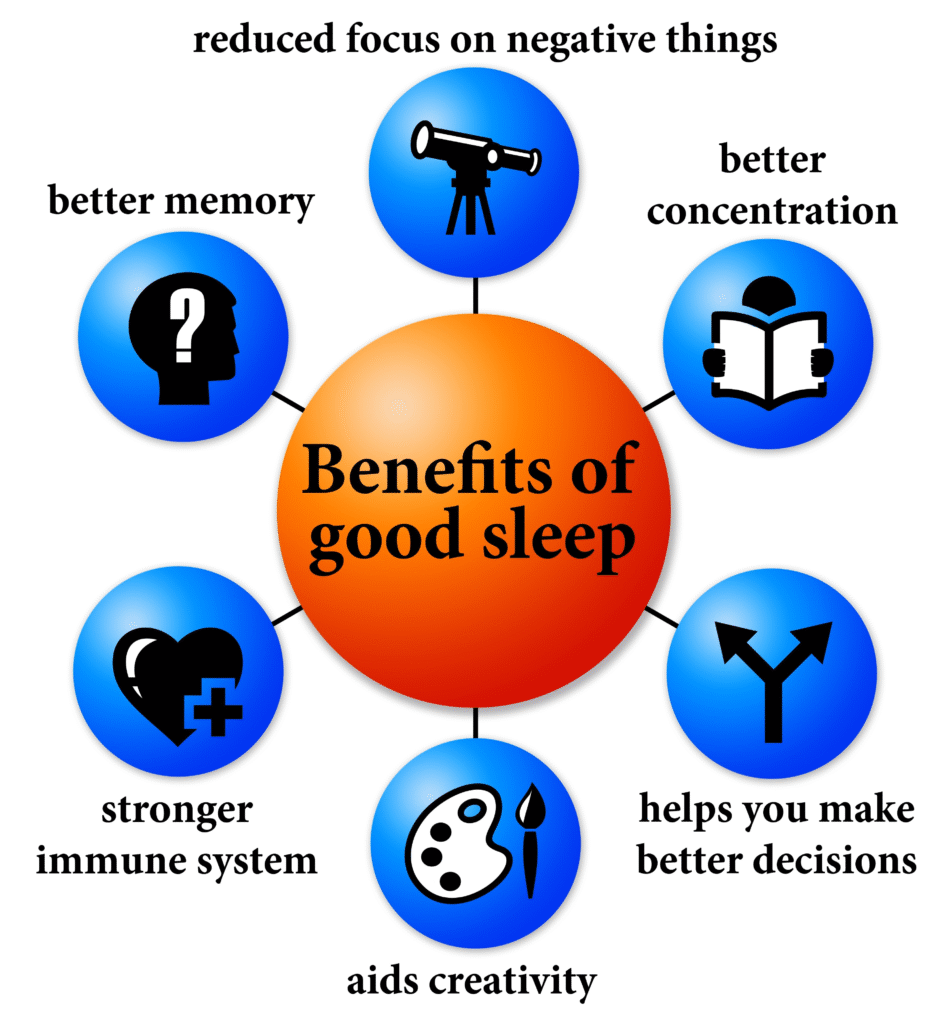
Good sleep is essential for optimal brain function. During deep sleep, the brain processes new information, strengthens neural connections, and prepares for learning the next day. This improves:
- Memory
- Problem-solving skills
- Focus and concentration
- Decision-making
On the other hand, poor sleep reduces alertness, impairs judgment, slows reaction times, and makes it harder to perform cognitive tasks. That’s why even a single night of insufficient sleep can feel like trying to function through mental fog.
How Good Sleep Improves Your Mental and Physical Health…..
2. Improves Emotional Stability
Sleep plays a crucial role in regulating emotions. When you sleep well, your brain is better equipped to handle stress, respond calmly to challenges, and maintain emotional control.
Poor sleep, however, triggers overactivity in the amygdala—the part of the brain responsible for emotions such as fear and anger. This can increase mood swings, irritability, frustration, and sensitivity.
Consistently getting good sleep helps you feel calmer, more balanced, and more emotionally resilient.
3. Lowers the Risk of Mental Health Disorders
There is a strong connection between sleep and mental health. Inadequate sleep has been linked with:
- Depression
- Anxiety
- Bipolar disorder
- Post-traumatic stress disorder (PTSD)
For example, chronic sleep deprivation increases levels of stress hormones and disrupts neurotransmitters such as serotonin and dopamine, which play key roles in mood regulation.
Improving sleep can significantly reduce symptoms of anxiety and depression and help stabilize mood. In many cases, addressing sleep quality becomes a fundamental part of mental health treatment.
Physical Health Benefits of Good Sleep
1. Boosts Immune System Function
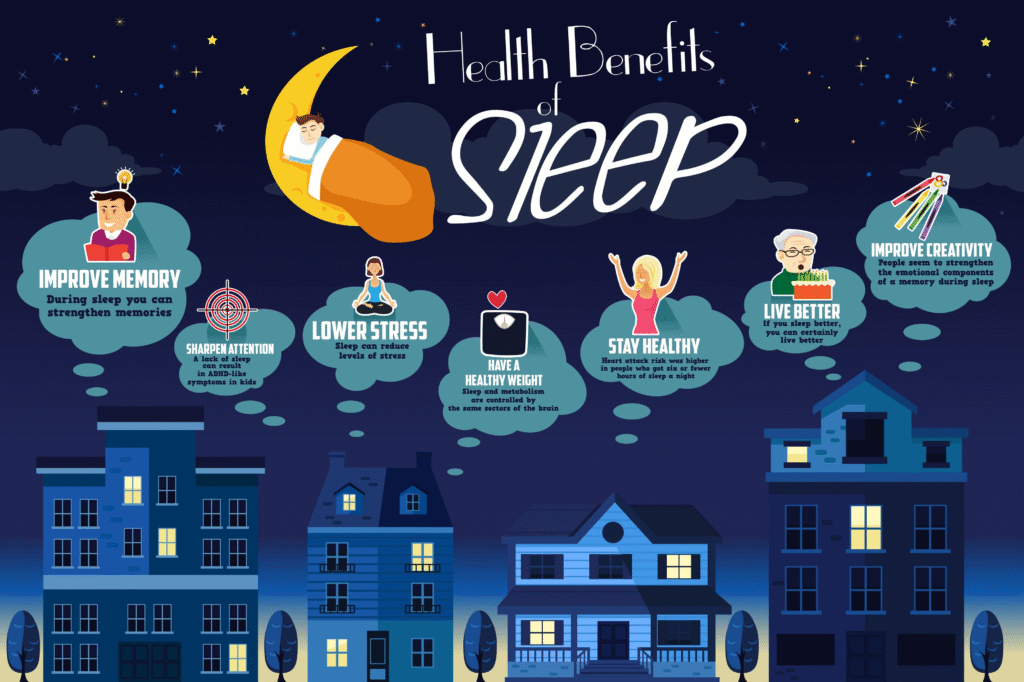
Your immune system works hardest when you sleep. During deep sleep, the body produces cytokines—proteins that fight inflammation, infection, and stress. Lack of sleep lowers the body’s ability to produce these protective molecules, making you more susceptible to colds, flu, and other illnesses.
People who consistently sleep well tend to have stronger immune responses and recover faster from infections.
2. Promotes Healthy Weight Management
Sleep plays a vital role in regulating appetite hormones. When you don’t sleep enough:
- Ghrelin, the hunger hormone, increases.
- Leptin, the hormone that signals fullness, decreases.
This hormonal imbalance can lead to overeating and cravings for sugary, high-calorie foods.
Additionally, lack of sleep slows down your metabolism and reduces your energy levels, making you less motivated to exercise. Over time, this can lead to weight gain and increase the risk of obesity.
Good sleep supports healthier eating habits, balanced metabolism, and better energy management.
3. Strengthens Heart Health
Your heart and blood vessels rely on sleep to repair and recover. Poor sleep has been associated with:
- High blood pressure
- Inflammation
- High cholesterol
- Increased stress hormones
- Higher risk of stroke and heart disease
While you sleep, your heart rate and blood pressure naturally drop, giving your cardiovascular system much-needed rest. Consistently sleeping well contributes to long-term heart health and reduces the risk of chronic conditions.
4. Improves Athletic Performance
Whether you are a professional athlete or simply enjoy exercising, sleep is essential for peak physical performance. Quality sleep:
- Enhances muscle recovery
- Boosts strength and endurance
- Improves reaction time
- Restores energy levels
- Reduces risk of injuries
Athletes who prioritize sleep tend to perform better in strength, endurance, and coordination than those who don’t.
5. Supports Hormonal Balance
Sleep is crucial for regulating various hormones, including:
- Growth hormone (for tissue repair)
- Cortisol (stress hormone)
- Insulin (blood sugar control)
- Reproductive hormones
Lack of sleep disrupts these systems and can contribute to infertility, thyroid issues, increased stress, and impaired glucose metabolism.
Proper rest keeps your hormonal system balanced, ensuring your body functions efficiently.
How to Improve Your Sleep for Better Health
Knowing the benefits is the first step; implementing better sleep habits is the next. Here are some practical tips to help you sleep better:
1. Maintain a consistent sleep schedule
Go to bed and wake up at the same time every day—even on weekends.
2. Create a calming bedtime routine
Reading, warm showers, gentle stretches, or meditation help prepare your body for sleep.
3. Limit screen time before bed
Blue light from phones and laptops disrupts melatonin production.
4. Keep your sleep environment comfortable
Ensure your room is cool, dark, and quiet.
5. Avoid caffeine and heavy meals late in the evening
Stimulants and heavy foods can disrupt your ability to fall asleep.
6. Exercise regularly
Physical activity improves sleep quality—but avoid intense workouts late at night.
7. Manage stress
Journaling, mindfulness, or breathing exercises before bed can help calm the mind.
Final Thoughts
Sleep is not just a nightly routine—it’s a foundational element of both physical and mental health. From improving memory and mood to strengthening the immune system and protecting your heart, sleep affects almost every part of your well-being.
By prioritizing quality sleep, you give your body the chance to heal, restore, and prepare for the challenges of a new day. If you want to live a healthier, more balanced life, start by improving your sleep habits. It might be the simplest yet most powerful change you can make.